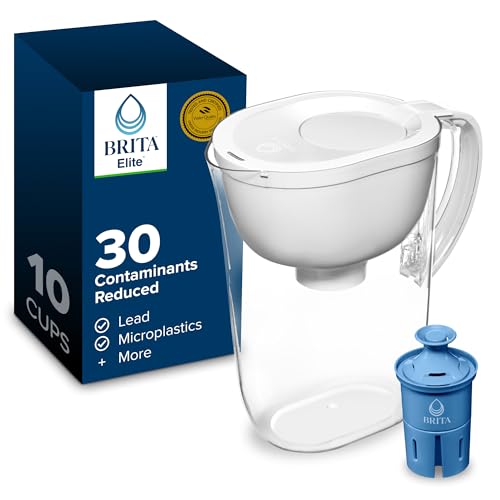
Beyond the obvious upfront product cost, a few less obvious costs are worth factoring into your filtration budget.
- High water usage may require more frequent cartridge replacement than general estimates assume.
- Whole-home system installation labor is often a separate cost from product pricing — get an all-in quote.
- Testing costs for verification are a separate expense beyond the filtration system itself.
- These less-obvious costs are worth factoring in beyond the upfront product purchase price.
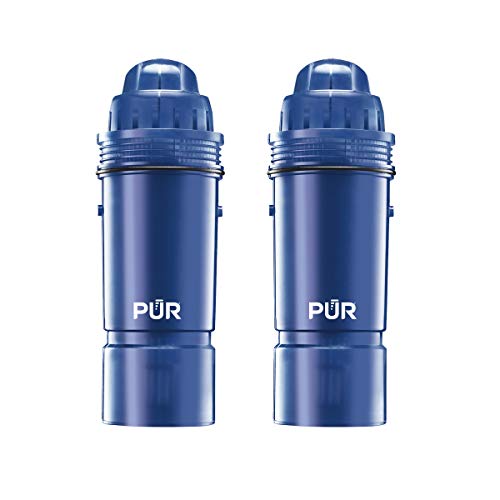
Cartridge Replacement Frequency
High-household-water-usage families may need more frequent cartridge replacement than the manufacturer’s general estimate assumes, increasing actual ongoing cost.
EPA’s WaterSense guidance is direct about why this is a recurring line rather than a one-time one: all water treatment systems require some level of ongoing maintenance to remain effective, and unmaintained systems may make water quality worse[1]. Filters should be replaced according to the manufacturer’s instructions and recommended schedule, and systems built around a membrane — reverse osmosis units in particular — have additional parts that need replacing over time[1].
The practical consequence for budgeting is that the replacement schedule belongs in your running costs from the day you buy, alongside the purchase price rather than after it. EPA notes that maintenance costs for all types of systems typically include periodic filter or membrane replacements[1], so no format escapes this entirely — the question is only how often and how much.

Installation Labor for Whole-Home Systems
Whole-home system product pricing often doesn’t include installation labor, which can add a meaningful percentage to your total project cost — get an all-in quote.
A whole-home unit is what EPA calls a point-of-entry system, installed where water enters the building so that treated water is distributed throughout it for all uses. EPA states that installation of these systems generally costs several thousand dollars and may require plumbing alterations and professional maintenance services[1].
That is three separate cost lines — the unit, the plumbing alteration, and any ongoing service — so a quote naming only the hardware is incomplete. For scale, EPA puts basic water pitchers and tap filters under $100 with no installation required, distillation and reverse osmosis systems at a few hundred dollars and possibly needing professional installation, and point-of-entry systems in the thousands, generally requiring it[1].

Testing Costs If You Want Verification
If you want to verify filtration effectiveness, factor in testing costs ($100-$300 per test) beyond the filtration system itself.
If the point of testing is verification, the result has to come from a laboratory that is actually accredited for drinking water. EPA advises households to have water tested by a state-certified laboratory and maintains a public list of certified drinking-water laboratories for exactly this purpose[1].
One caveat applies specifically to microplastics rather than to regulated contaminants. WHO’s 2019 review identified developing standard methods for measuring microplastic particles in water as an open research need[2], so results are not yet comparable between laboratories the way a nitrate or lead figure is. Treat a microplastics number as a reading from one method, and avoid comparing it against a result produced somewhere else.

FAQ
What’s the most commonly overlooked cost in this space?
Installation labor for whole-home systems is often overlooked since product pricing doesn’t always include it — get an all-in quote covering both product and labor.
Get an all-in quote covering both product and installation labor before committing to a whole-home system purchase.
References
- U.S. Environmental Protection Agency, WaterSense. Guide to Selecting Water Treatment Systems (November 2024). epa.gov
- World Health Organization. WHO calls for more research into microplastics and a crackdown on plastic pollution (22 August 2019). who.int
These statements have not been evaluated by the Food and Drug Administration. This information is not intended to diagnose, treat, cure, or prevent any disease. Content is for informational purposes only and is not medical advice; consult a qualified healthcare provider before starting any supplement. As an Amazon Associate we earn from qualifying purchases.