Microplastics are tiny plastic particles that can enter drinking water, food, and indoor air, and homeowners are increasingly looking for products that claim to limit this exposure. Because the science around health effects is still evolving, the most reliable way to compare products is to understand the certifications and standards that back up those claims.[1][2]
This guide walks you through the major certification programs, the specific standards they test against, and practical steps you can take to verify a product’s credentials before you spend money. It focuses on water‑treatment devices, food‑contact materials, and everyday household items, and it highlights where professional testing may still be the safest option.
- Look for NSF/ANSI 42, 53, 401, or WQA Gold Seal on water filters; these are the only widely recognized marks that include microplastic particle testing.
- Food‑contact items should reference FDA 21 CFR 177.1520 or EU Regulation (EU) No 10/2011 for migration limits that curb microplastic release.
- Ask for the full third‑party test report — method, particle size, flow conditions — before trusting a single‑number removal claim.
- Price ranges: certified carbon block $80–$150, certified RO $250–$600 plus install; certified reusable bottles $15–$30, certified food containers $10–$25.
Why Certifications Matter for Microplastics
A certification is an independent, third‑party verification that a product meets a defined performance criterion. For microplastics, the relevant criteria usually involve particle‑size removal efficiency, material leaching limits, or both. Without a recognized mark, a manufacturer’s claim is essentially self‑reported and difficult to audit.
Certifications also create a common language across brands. When you see a logo from NSF International, the Water Quality Association (WQA), or an ISO standard, you know the product has been subjected to the same test protocol as competing models. This makes side‑by‑side comparison possible and reduces the risk of buying a device that only looks effective on paper.
Key Certification Bodies and What They Test
NSF/ANSI 42 and 53 are the most widely cited standards for point‑of‑use (POU) and point‑of‑entry (POE) drinking‑water filters. NSF/ANSI 42 covers aesthetic effects such as taste, odor, and chlorine reduction, while NSF/ANSI 53 addresses health‑related contaminants such as lead and volatile organic compounds. NSF/ANSI 53 does not carry a microplastics claim. The microplastics reduction claim was added to NSF/ANSI 401, and the test it relies on is the nominal particulate reduction, Class I claim in NSF/ANSI 42.[3]
The Water Quality Association’s Gold Seal program mirrors NSF requirements but adds an ongoing factory audit component. Products bearing the Gold Seal have passed the same performance tests and are re‑evaluated annually, which can be a useful indicator of consistent manufacturing quality.
For food‑contact plastics, look for compliance with FDA 21 CFR 177.1520 (polyethylene and polypropylene) or the EU Regulation (EU) No 10/2011. These regulations set migration limits for monomers and additives. They are not microplastics standards, and FDA states there is not sufficient scientific evidence to show that microplastics and nanoplastics from plastic food packaging migrate into foods and beverages.[2]
Common Standards for Water Filtration Products
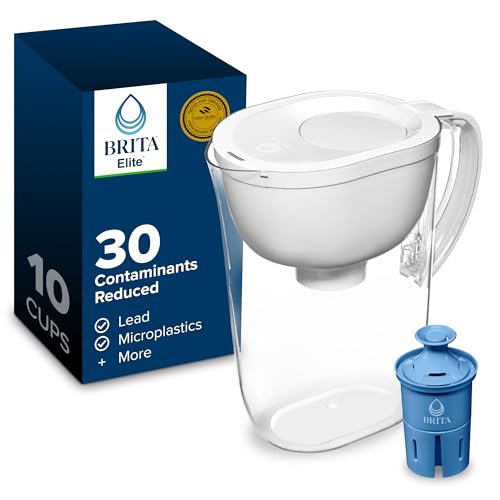
NSF/ANSI 401 is a newer standard that specifically evaluates the reduction of emerging contaminants, including certain pharmaceuticals, pesticides, and microplastics. Certification to NSF/ANSI 401 on its own does not mean a filter was tested for microplastics: the standard covers up to 15 emerging compounds such as pharmaceuticals, pesticides and flame retardants, and microplastics reduction is a separate claim a manufacturer has to certify for. Where that claim is held, the requirement underneath it is an 85 % reduction of particles in the 0.5 µm to under 1 µm range, measured with the NSF/ANSI 42 nominal particulate reduction, Class I test. So the thing to look for is the phrase “Microplastics Reduction” on the certification listing itself, not the number 401 on the box.[3]
ISO 16232 (road‑vehicle cleanliness) and ISO 24187 (microplastics in water) are laboratory methods rather than product certifications, but they are referenced in test reports. If a manufacturer cites ISO 24187 results, ask for the full test report — including particle‑size distribution, flow rate, and pressure drop — to confirm the conditions match your household use.

Reverse‑osmosis (RO) systems are covered by NSF/ANSI 58, the point‑of‑use reverse‑osmosis standard, which includes a total dissolved solids (TDS) reduction requirement. NSF/ANSI 58 certification is not by itself a microplastics claim, so check the listing for that claim separately.[3] While RO is highly effective for microplastics, it also removes beneficial minerals and produces wastewater, so weigh the trade‑offs against your water quality goals and budget.

Standards for Food‑Contact Materials and Household Items
Reusable water bottles, food storage containers, and silicone kitchen tools should carry a statement of compliance with either FDA food‑contact regulations or the EU’s Framework Regulation (EC) No 1935/2004. These frameworks require migration testing that captures the release of particles down to the low‑micron range.
The Global Organic Textile Standard (GOTS) and OEKO‑TEX Standard 100 address fiber content and chemical residues. Neither certifies fiber shedding, and neither should be read as a microfiber‑release claim: there is currently no consumer textile certification for microfiber shedding at all. Catching fibers at the washing machine, or choosing natural fibers, is the practical lever here rather than a label.
For dishwasher‑safe plastics, look for the “BPA‑free” label combined with a statement that the product meets ASTM D6400 (compostable) or ASTM D6868 (biodegradable) — these standards include disintegration testing that indirectly limits persistent microplastic fragments.
How to Verify Claims and Spot Greenwashing
First, locate the certification mark on the product packaging or the manufacturer’s website. Click the mark; legitimate programs link to a searchable database where you can enter the model number and confirm current status. If the link leads to a generic homepage or a broken page, treat the claim as unverified.
Second, request the full test report. Reputable companies will provide a PDF that lists the test method (e.g., NSF/ANSI 401, ISO 24187), challenge water composition, particle‑size range, flow rate, and percent removal. Be wary of summary sheets that only quote a single percentage without context.
Third, compare price to performance. A certified under‑sink carbon block filter typically costs $80–$150 and lasts 6–12 months; a certified RO system runs $250–$600 plus installation. If a product claims “microplastic‑free” water for under $30 and lacks any third‑party mark, the claim is likely marketing rather than science.

FAQ
Do all NSF‑certified filters remove microplastics?
No. The microplastics reduction claim lives in NSF/ANSI 401, but a filter can be certified to NSF/ANSI 401 for pharmaceuticals and pesticides without holding it — so check the listing actually says “Microplastics Reduction”. There is no microplastics claim in NSF/ANSI 53. NSF/ANSI 42 matters indirectly rather than not at all: its nominal particulate reduction, Class I test — an 85 % reduction of particles from 0.5 µm to under 1 µm — is the test the microplastics claim is built on, so a Class I listing is the credential underneath it.[3]
Is a “BPA‑free” label enough to guarantee low microplastic shedding?
No. BPA‑free only addresses bisphenol‑A content. Microplastic shedding depends on polymer type, manufacturing quality, and wear. Look for compliance with FDA or EU food‑contact migration limits in addition to BPA‑free claims.

Can I test my tap water for microplastics at home?
Home test kits for microplastics are not standardized. FDA notes there are no standardized methods for how to detect, quantify or characterize microplastics, which is why published numbers vary so widely.[2] The furthest any US regulator has gone is California, where the State Water Resources Control Board adopted a definition of microplastics in drinking water in 2020, adopted standard operating procedures for measuring them by Raman and infrared spectroscopy, and accredits laboratories to run them.[4] Outside a program like that, treat any single number you are handed as method‑dependent rather than absolute.
When should I hire a professional for microplastic assessment?
If you suspect high exposure from aging plumbing, industrial runoff, or need a whole‑house treatment design, a licensed water‑quality professional can conduct certified sampling, interpret results, and size a system that meets verified standards.
Certifications provide a useful baseline but do not guarantee zero microplastic exposure; real‑world performance varies with water chemistry, flow rate, and maintenance. For health‑related concerns or complex whole‑house solutions, consult a licensed water‑quality professional and consider accredited laboratory testing.
References
- WHO calls for more research into microplastics and a crackdown on plastic pollution. World Health Organization (2019)
- Microplastics and Nanoplastics in Foods. U.S. Food and Drug Administration
- Update on Microplastics Reduction Claims. Rick Andrew, NSF Director of Global Business Development — Water Systems, Water Conditioning & Purification (2022)
- Microplastics in Drinking Water. California State Water Resources Control Board
These statements have not been evaluated by the Food and Drug Administration. This information is not intended to diagnose, treat, cure, or prevent any disease. Content is for informational purposes only and is not medical advice; consult a qualified healthcare provider before starting any supplement. As an Amazon Associate we earn from qualifying purchases.