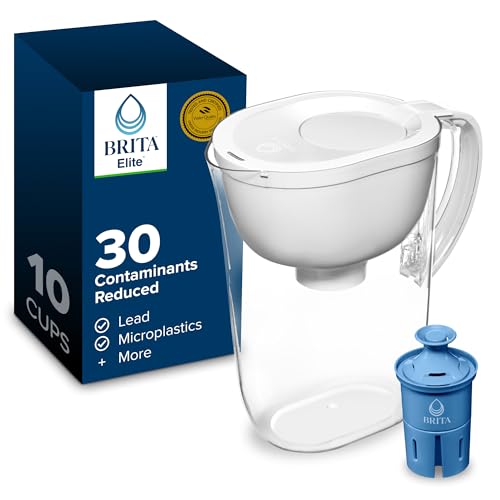
Microplastics have become a widely discussed topic, and separating myth from fact helps homeowners focus on what actually matters.
- Household indoor exposure is a distinct, real concern separate from ocean microplastic pollution.
- Microplastic particles of health concern are invisible to the naked eye, requiring lab testing to detect.
- Filter effectiveness varies significantly — not all filters are effective against microplastics specifically.
- Understanding these distinctions helps homeowners focus on evidence-based prevention rather than assumption.
Myth: Microplastics Are Only an Ocean Problem
Fact: research increasingly documents microplastic presence in household dust, tap water, and even food, making indoor exposure a real, distinct concern from marine microplastic pollution.
Myth: You Can See Microplastics With the Naked Eye
Fact: most microplastic particles of health concern are far too small to see, requiring specialized lab analysis to detect and quantify — this is why testing, not visual inspection, matters.

Myth: Any Water Filter Removes All Microplastics
Fact: filter effectiveness varies significantly by filtration technology and micron rating — not every filter marketed for general water quality is specifically effective against microplastic particles.

Myth: Bottled Water Is the Safe Alternative
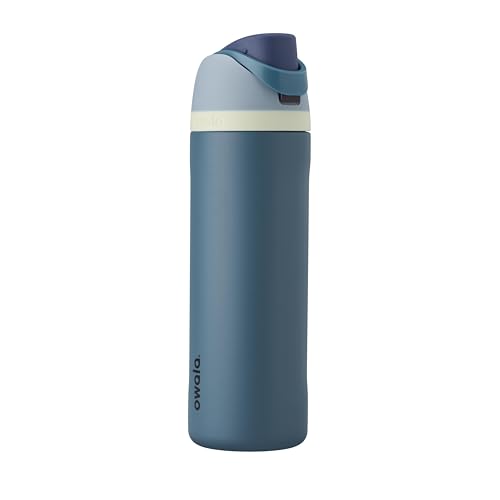
Reaching for bottled water is a common response, and it rests on an assumption the research does not support. Bottled water is itself packaged in plastic, and studies that have examined it report particle counts comparable to or higher than the tap water it was meant to replace. Heat and time in storage are part of why, since both act on the container rather than on the water.
The useful conclusion is not that bottled water is uniquely bad but that switching containers is not the same as treating water. A household that filters at the tap and stores the result in glass or stainless steel has addressed both halves of the problem, which buying bottled water does not.
Myth: Boiling Destroys Microplastics
Boiling is trusted because it works on something else. It inactivates many biological contaminants, so it gets extended by analogy to particles it cannot act on. Plastic particles are not alive and are not volatile at the temperatures a kettle reaches, so boiling does not destroy them or drive them off as steam.
What boiling can do is make some of them settle. In one PubMed-indexed study of tap, pond and groundwater in Khulna, Bangladesh, boiling cut measured microplastic counts by more than 70%, and the drop was larger in harder water, because particles settled out with mineral scale rather than breaking down[1]. The particles are still in the pot, so the benefit only arrives if the boiled water is left to cool and settle and the clear water is poured off. That is one study in one city, not a settled household method, and treating it as a substitute for filtration would be reading further than the evidence currently supports.
Why These Myths Persist
Most of these beliefs are not careless. Each one borrows a rule that is correct somewhere else, whether that is boiling for pathogens, filtering for taste, or bottling for purity, and applies it to a contaminant the rule was never designed for. That is also why they are stubborn, since the underlying habit usually does accomplish something real.
The distinction worth carrying is between removing particles and avoiding adding them. Filtration is a removal step and container choice is an avoidance step, and a household that understands which one it is doing at any moment is less likely to substitute one for the other.
FAQ
Can I just look for microplastics in my tap water?
No — the particles of concern are far too small to see with the naked eye. Testing or a properly rated filter are the appropriate approaches, not visual inspection.
This is an evolving research area — evidence tiers and specific health effect data should be verified against current sources.
References
- Microplastics in potable water of a coastal city of Bangladesh: Efficacy of boiling as a point-of-use mitigation strategy. The Science of the total environment, 2026
These statements have not been evaluated by the Food and Drug Administration. This information is not intended to diagnose, treat, cure, or prevent any disease. Content is for informational purposes only and is not medical advice; consult a qualified healthcare provider before starting any supplement. As an Amazon Associate we earn from qualifying purchases.