An annual pass over your home is a sensible cadence for microplastics, but not for the reason the phrase usually implies. There is no inspector to call, and no yearly test that most households would sensibly book: mail-in kits analysed by accredited laboratories do exist for drinking water, but they run several hundred dollars per sample. What an annual review actually does is catch the slow, invisible drift: filter cartridges that quietly ran past their rated capacity, flooring and textiles that shed a little more each year, and kitchen plastics that have accumulated enough surface damage to start shedding measurably.
- An annual review is a maintenance pass, not an inspection. Mail-in laboratory testing of drinking water is available at several hundred dollars per sample, and nothing consumer-available measures the particles in your air or dust.
- Filter cartridge capacity is the one hard deadline on the list, because a spent cartridge looks identical to a fresh one.
- Soft furnishings and flooring are the dominant indoor source, so the annual check is mostly about textiles, not about plastics you can see.
- Scratched plastic cutting boards and heat-cycled food containers are worth replacing on a visible-wear trigger rather than a calendar date.
Why a Calendar Cadence Fits This Hazard Poorly
Radon, lead paint and asbestos all have the same shape: a test, a number, a threshold, and a remediation decision. Microplastics has none of those. Quantifying particles requires laboratory instrumentation such as Fourier transform infrared spectroscopy, Raman spectroscopy, or pyrolysis gas chromatography mass spectrometry [1]. Reviews of food-sample methods describe chemical digestion steps using nitric acid, hydrogen peroxide or potassium hydroxide before identification is even attempted [2]. None of that is available to a homeowner, and it will not be soon.
So the useful version of an annual review drops the testing step entirely and keeps the maintenance step. That is a smaller job, and it is the part that actually changes anything.
What Accumulates Over Twelve Months
Indoor air and settled dust are where the year shows up. An early survey of indoor and outdoor air found indoor fiber concentrations between 1.0 and 60.0 fibers per cubic metre against 0.3 to 1.5 outdoors, with deposition rates of 1,586 to 11,130 fibers per square metre per day and settled dust carrying 190 to 670 fibers per milligram [3]. Notably, only about a third of those fibers were petrochemical; the rest were cellulosic. That ratio is a useful corrective to the assumption that every fiber in household dust is plastic.
A review of the indoor environment identifies abrasion of synthetic textiles and deterioration of flooring materials as the major sources, with carpeting, airflow and ventilation as the factors that move the numbers [4]. A separate review adds household products containing plastic beads, artificial turf, and particulate emissions from 3D printing to the indoor inventory [5].
The One Item With a Real Deadline
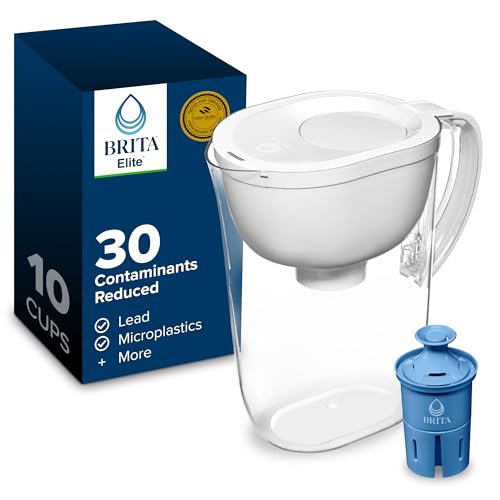
Every filtration cartridge in the house has a rated capacity in gallons, and once past it the cartridge does not announce itself. It looks the same, the water tastes roughly the same, and flow may barely change. This is the single item on an annual review where a calendar entry genuinely prevents a silent failure. Record the installation date on the housing itself with a marker rather than trusting memory, and note the rated capacity next to it.
Municipal treatment already removes a substantial fraction before water reaches the house. One drinking water plant study measured 17.88 items per litre in raw river water and cumulative removal of 63 percent after pulse clarification and 85 percent after sand filtration [6]. Household filtration is a polishing step on top of that, which is precisely why an exhausted cartridge is easy to ignore.
Flooring, Textiles and the Vacuum
The Birmingham indoor air study sampled 30 homes and 30 workplaces and found average airborne concentrations of 15.6 plus or minus 5.4 particles per cubic metre in homes against 13.1 plus or minus 6.5 in workplaces, with atmospheric deposition of 3,735 plus or minus 1,343 particles per square metre per day in homes. The authors attribute the higher home figure mainly to carpeting, since all sampled homes were carpeted and 13 of the workplaces were not [7].
That makes the annual textile pass concrete. Check the condition of high-traffic carpet and rugs, upholstery that has started to pill, and any synthetic fleece or microfiber items in heavy rotation. Worn synthetic fabric sheds more than intact fabric, and washing accelerates it: a study of three synthetic fabrics measured up to 74,816 plus or minus 10,656 microfibers released per square metre per wash from acetate, rising with wash temperature and with detergent use [8].

Kitchen Plastics: A Wear Trigger, Not a Date
Two categories are worth inspecting rather than scheduling. Plastic cutting boards shed along cut grooves: Raman imaging of a chopping board estimated 100 to 300 particles per millimetre per cut along the groove and roughly 3,000 per square millimetre per cut in an already scratched area [9]. The scratched area figure is the one that matters, because it means damage compounds.
Food containers respond to heat rather than to age. Testing of containers and reusable pouches found microwave heating produced the highest release of any usage scenario, with some containers releasing as many as 4.22 million microplastic and 2.11 billion nanoplastic particles from a single square centimetre in three minutes [10]. Release also tracks the material’s maximum service temperature, and rises with microwave power and heating duration [11]. A container that has been microwaved routinely for years is a better replacement candidate than one that is simply old.

What to Leave Off the Checklist
- Any product marketed as a microplastics test kit. A total dissolved solids meter measures dissolved minerals and reads zero on a suspension of plastic particles.
- Post-remediation verification. There is no remediation event and nothing to verify.
- Insurance or disclosure steps. No insurer covers microplastics and no jurisdiction requires disclosure of it at sale.
FAQ
How often should I actually do this?
Once a year for textiles and flooring condition is reasonable. Filter cartridges follow their rated capacity, which for many under-sink units falls well short of twelve months of use.
Does a HEPA vacuum help?
It addresses settled dust, which is where deposition accumulates [3]. It does not change what the textiles shed in the first place, so it is a downstream control rather than a source control.
Is any of this proven to affect my health?
No. Particles have been detected in human tissue, and a 2025 review notes that early clinical findings suffer from low patient numbers and inadequate exposure assessment, which precludes adequate risk assessment [12]. Reducing exposure is a precautionary choice, not a treatment.
Nothing in an annual home review can measure your exposure. Treat this as maintenance of equipment and materials, not as an assessment of risk.
References
- Analytical methods for microplastics in the environment: a review. Environ Chem Lett (2023). PMID 36196263
- Microplastics: A review of analytical methods, occurrence and characteristics in food, and potential toxicities to biota. Sci Total Environ (2022). PMID 34571218
- A first overview of textile fibers, including microplastics, in indoor and outdoor environments. Environ Pollut (2017). PMID 27989388
- Critical review on airborne microplastics: An indoor air contaminant of emerging concern. Environ Res (2024). PMID 38154562
- Microplastics and their Additives in the Indoor Environment. Angew Chem Int Ed Engl (2022). PMID 35670249
- Microplastics removal efficiency of drinking water treatment plant with pulse clarifier. J Hazard Mater (2021). PMID 33601144
- Microplastics in indoor air from Birmingham, UK: Implications for inhalation exposure. Environ Pollut (2024). PMID 39306070
- Microfiber release from different fabrics during washing. Environ Pollut (2019). PMID 30884392
- Assessment of microplastics and nanoplastics released from a chopping board using Raman imaging in combination with three algorithms. J Hazard Mater (2022). PMID 35278972
- Assessing the Release of Microplastics and Nanoplastics from Plastic Containers and Reusable Food Pouches: Implications for Human Health. Environ Sci Technol (2023). PMID 37343248
- Nanoplastic release from disposable plastics: Correlation with maximum service temperature. J Hazard Mater (2024). PMID 39536343
- Health impacts of microplastic and nanoplastic exposure. Nat Med (2025). PMID 40935856
These statements have not been evaluated by the Food and Drug Administration. This information is not intended to diagnose, treat, cure, or prevent any disease. Content is for informational purposes only and is not medical advice; consult a qualified healthcare provider before starting any supplement. As an Amazon Associate we earn from qualifying purchases.
